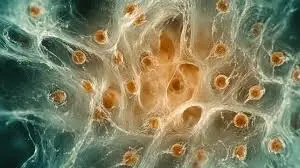
Parasitic diseases have been on the rise worldwide in recent years. As global warming brings milder winters to temperate regions, parasites in water and soil can survive the winter because temperatures now rarely remain below freezing for long.
In addition, the growth of trade and tourism, and the resulting increase in travel around the world, facilitate the spread of infections. Finding tropical pathogens in countries with temperate climates is no longer surprising.
Unfortunately, the diagnosis of parasitic infections remains seriously neglected in medical practice in both poorer and developed countries. Treatment options are very limited and often ineffective.
In Bulgaria, the diagnosis and treatment of parasitic infections took a step forward with the introduction of EAV testing in some alternative medicine practices, using the IKG-2 device, registered for use in the European Union. It is used to identify various pathogens, including bacteria, viruses, fungi and parasites.
Heliantheae Ltd manufactures four herbal tinctures, has obtained the necessary registrations for them, and has successfully introduced their use in clinical practice for the treatment of parasitic diseases:
PARA-7®, PARA-21®, NEDA® and ACHYNORA®. These preparations have been used successfully to treat infections caused by a wide range of known parasite species.
According to the Voll method, the physical condition of the body’s organs and systems can be assessed by measuring electrical resistance at points along the traditional Chinese acupuncture meridians and the additional meridians described by the German physician Dr Reinhold Voll. The measurements are safe and painless and are suitable for adults, children and pregnant women. Test samples are used to confirm the presence and type of pathogens and to select appropriate preparations for treatment.
For example, because of the risk of parasitic infection when travelling to tropical countries, patients may wish to take an antiparasitic preparation as a preventive measure during their stay. The recommendation is PARA-21® twice daily for adults and PARA-7® for young children. This approach works well in the treatment of roundworms (nematodes) and flatworms (flukes and tapeworms). These parasites are relatively large and visible to the naked eye.
Single-celled parasites (Protozoa) are small enough to be visible only under a microscope. Their behaviour is more complex. In addition to motile forms and eggs, they form dormant stages known as “cysts”, which can remain in tissues and blood for long periods—even years—with few or no symptoms. They are particularly difficult to identify by microscopic examination of the blood because they closely resemble immature white blood cells. Their development is suppressed by the immune system.
Cysts become active when a person’s energy and energetic defences decline: during physical exhaustion, emotional stress, prolonged sleep deprivation or illness—in other words, when the immune system’s resources have been depleted over an extended period. The cysts then become active and motile, accompanied by a range of adverse effects and symptoms.
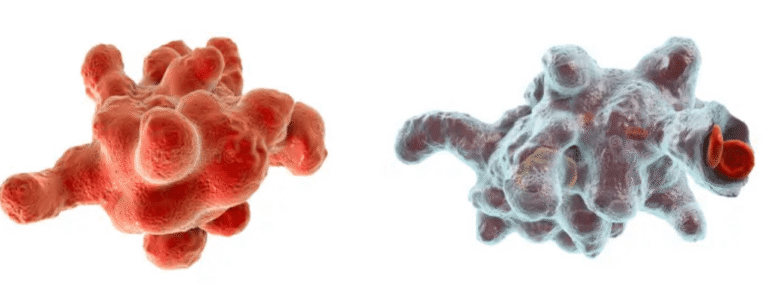
Entamoeba histolytica — exists as a motile trophozoite (10–60 µm, typically 15–20 µm, irregular in shape, with pseudopodia and a single nucleus) and a non-motile, infective cyst (10–20 µm, spherical, usually with four nuclei when mature).
Protozoan infections are often zoonotic: the parasites live in and are spread by animals such as cats, dogs, rabbits, birds and rodents, and people can become infected through contact with them.
The protozoan parasites most frequently identified through EAV testing include Entamoeba histolytica (an amoeba found in contaminated soil and water, both in Bulgaria and in tropical regions). Amoebae associated with warmer climates include Dientamoeba fragilis and Balantidium coli. Toxoplasma gondii and Giardia lamblia are frequently found in cats, while Coccidia canis (Cystoisospora canis) occurs in dogs, particularly small breeds. Chickens and other birds carry poultry coccidia.
All of these protozoan parasites can also infect humans.
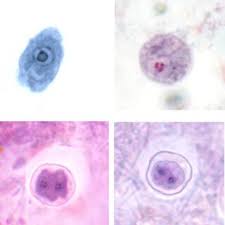
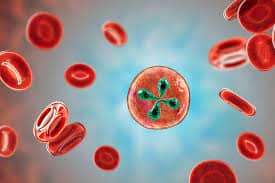
In humans, infection with the protozoan Trichomonas vaginalis is known to spread through sexual contact, swimming pools and toilets. Less well known, but more dangerous, is Trichomonas hominis, which is suspected of having carcinogenic effects. The protozoan parasite Babesia, transmitted by small ticks, is also detected.
After travelling to tropical regions, testing for malaria is recommended, particularly if there are episodes of chills.
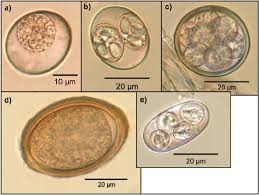
Coccidiosis is caused by microscopic, single-celled parasites (of the genera Eimeria and Cystoisospora), identified by the size and shape of their oocysts. These vary considerably between species but are generally small, approximately 10–50 µm. They may be round, oval or elliptical, with smooth or rough walls, and may contain one or more sporocysts enclosing sporozoites.
For example, the oocysts of Cystoisospora belli are large (25–30 µm) and elliptical, while those of some canine coccidia may measure 40–50 µm. Smaller species affecting poultry may have oocysts measuring around 16 × 15 µm.
The following notes are intended primarily for my fellow EAV practitioners.
At the initial consultation, a complete EAV assessment must be carried out, including the Pd (blood and parenchymal tissue) and Nd (nerve degeneration) meridians.
High readings from the intestines (GI and IG) indicate one of two things: either a recent infection or a high intake of sugary foods, which provides nourishment for the parasites. Diet No. 3 should therefore be prescribed: no sugar, honey, sugary foods or sweetened drinks.
The parasites gradually move towards organs with a rich blood supply—the liver and spleen (F on the right and RP on the left). In laboratory blood tests, this corresponds to reduced haemoglobin (Hb) and elevated eosinophil (Eo) levels.
Treatment is specific to each individual. Even when the same parasite is identified in several family members, a different herbal preparation may work for each person.
Through many years of following my long-standing patients, I have noticed that the same protozoan parasite we previously treated sometimes reappears years later. One example is a female patient with Toxoplasma associated with cats, whom I had treated ten years earlier. I interpret this as the reactivation of dormant cysts under unfavourable circumstances in the patient’s life.
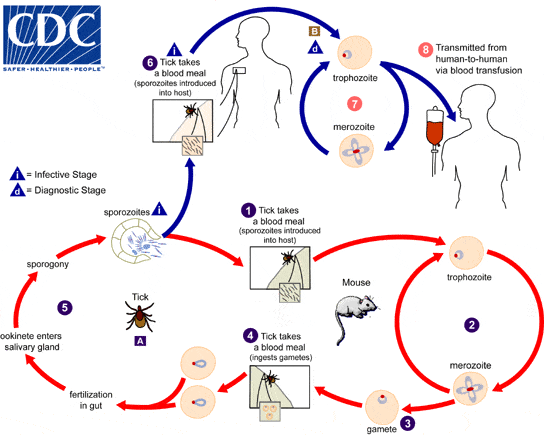
This is very important in clinical practice. It may help explain why malaria occurs in cycles and can recur even years later. Malaria is caused by protozoan parasites of the genus Plasmodium, most commonly Plasmodium falciparum. For example, a woman came to me because she had been feeling unwell recently. The test indicated malaria, to my surprise—but not hers, as she had been treated for the disease in Africa several years earlier.
After identifying a protozoan parasite, I now follow a new protocol that has yielded excellent results and that I recommend.
Treatment Protocol for Protozoan Infections
Two groups of preparations are used:
Group A: PARA-7®, PARA-21®, or the PARA base-formula tincture. (The latter must be prepared and prescribed only by a certified practitioner.)
One tincture from Group A, selected through EAV testing, is administered twice daily for seven days, targeting motile forms and eggs.
Group B: NEDA® or ACHYNORA® tinctures. Their role is to break down the protein coat of the cysts, allowing white blood cells to do their work.
One tincture from Group B, selected through EAV testing, is prescribed twice daily for seven days during the following week.
Alternate the selected Group A and Group B tinctures each week, taking the prescribed tincture twice daily. Continue treatment for three months.
A complete follow-up EAV assessment is then carried out at three and six months.
Remember that protozoan parasites can affect the reproductive organs of both women and men and may cause infertility. Monitor the prostate and testes in men, and the uterus and ovaries in women.
Since protozoan parasites sometimes enter the spinal cord and brain, all points on the nerve degeneration meridian (Nd) must be measured on both sides of the body. Be alert to neurological symptoms such as numbness, tingling, movement difficulties, brain fog and others.
Explain to patients that, in the event of infection, household pets must also be treated using the same A/B protocol, with the dosage adjusted to the animal’s weight: three drops per 10 kg of body weight, twice daily.
In this way, all kinds of parasitic infections—even the most difficult—can be treated successfully, with lasting results.
